Understanding the Marketing Funnel for Growth
Every business already has a marketing funnel. You didn't design it, but it exists: the path people take from never having heard of you to being a customer who tells their friends. Most owners have never drawn it out, which means they can't see where people fall off it, which means when growth stalls the only tool left is "post more."
Understanding the funnel changes that. Once you can see the four stages and what each one needs, you stop guessing and start fixing the specific place the leak is. Here's the map.

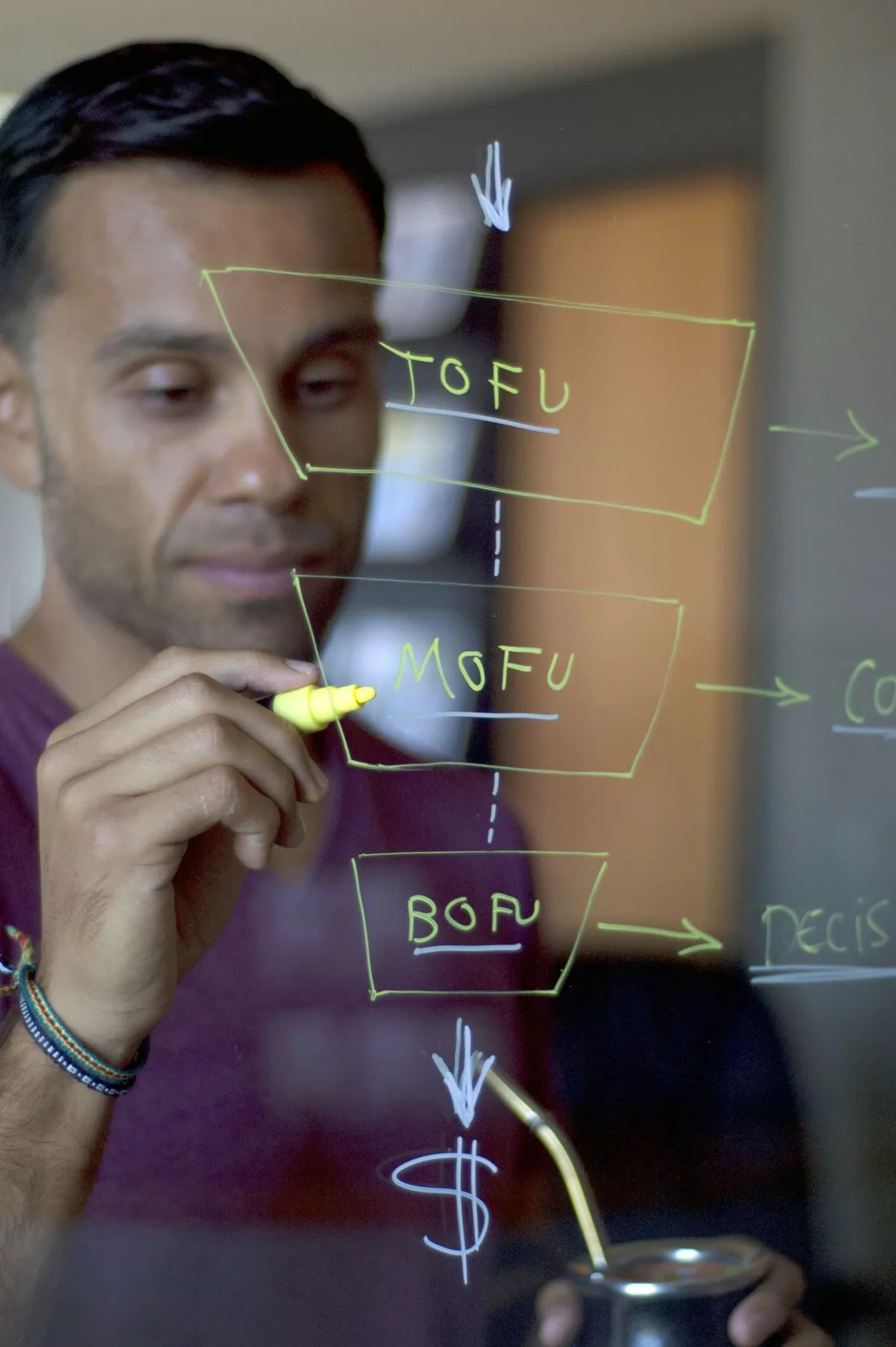
The funnel: a map of the customer journey
The funnel describes how a prospect moves from not knowing you exist to actively recommending you. It narrows as it goes, because people drop out at each step. That narrowing is normal. The question is whether it's narrowing at a healthy rate or leaking at one stage in particular.
Four stages: Awareness, Consideration, Conversion, Loyalty. Each stage has a different person in it, asking a different question, with a different concern. That's the whole reason the map matters.
Why each stage needs different content and messages
The most common funnel mistake is pushing the same message everywhere. A "book now" ad to someone who's never heard of you. An educational blog post to someone who's already on your pricing page trying to decide. A generic newsletter to a customer who bought last week.
Each mismatch loses people. Awareness needs education and recognition. Consideration needs proof and comparison. Conversion needs reassurance and an easy path. Loyalty needs ongoing value and a reason to come back. Same business, four different conversations.
Stage 1: Awareness, being found by the right people
At the top, people don't know you exist, and many of them don't yet have a name for their problem. The job here is to introduce the brand to qualified people and help them recognize the situation they're in.
What works: educational content, local search visibility, a Google profile that shows up for your category plus your city, and content that names the problem before it names the solution. Someone searching "why isn't my furnace heating evenly" is in awareness. A post that explains the three common causes earns their trust before they've ever heard your company name.
What doesn't: product-only messaging to people who don't know they need it, and vanity metrics. A thousand views from people who will never buy is not awareness. It's noise.
Local businesses often think awareness is their problem when it isn't. If people are finding you and not converting, more awareness just leaks faster. Check the later stages first.
Stage 2: Consideration, helping prospects compare and evaluate
Now they know you exist and they're weighing options. They're reading reviews, comparing prices, looking at your site next to two competitors' sites, and asking "is this the right one for me?"
What works: proof. Case studies, testimonials with specific outcomes, before-and-afters, comparison guides, an honest FAQ, a clear explanation of how you work and what it costs. This is the stage where a well-written service page or a detailed guide earns its keep.
What doesn't: vagueness. If your site says "contact us for pricing" and a competitor's says "$X for most jobs, here's what's included," the competitor wins the consideration stage without doing anything else. Weak consideration content doesn't lose people to nothing. It loses them to whoever answered their questions.

Stage 3: Conversion, making it easy to say yes
They've decided you're probably the one. Now they need to actually take the step, and this is where an astonishing number of businesses lose the customer they'd already won.
What works: one obvious next step, a form or booking flow that works on a phone, transparent pricing or a clear quote process, social proof right at the decision point, and a fast response. Remove every ounce of friction. Every extra field, every "we'll get back to you," every broken link costs a customer who was ready.
What doesn't: assuming the problem is content volume. When conversion is weak, the fix is almost never more posts. It's the experience after the click. We wrote about the four places it usually breaks in Content Not Converting? It's Almost Never the Content.
Stage 4: Loyalty, turning customers into advocates
The sale isn't the end of the funnel. It's the beginning of the stage most businesses ignore entirely, and the one with the best economics, because a returning customer costs nothing to acquire and a referring customer brings the next one for free.
What works: a good onboarding or first-visit experience, a check-in after the job, useful follow-up content, recognition of repeat customers, a simple referral ask, a reason to come back. This is also where relationship does its work. Loyal customers aren't built by discounts. They're built by feeling known.
What doesn't: silence. If the last thing a customer hears from you is the invoice, you've turned a relationship into a transaction, and transactions don't refer.
Strong loyalty reduces pressure on every stage above it. A business with a healthy loyalty stage needs far less awareness spend, because its customers are doing the awareness for it.
From "post more" to "fix the leaks"
Here's what changes once you can see the funnel. When growth stalls, you stop reaching for the megaphone and start asking where people are dropping off.
Plenty of traffic, few inquiries: consideration or conversion. Plenty of inquiries, few customers: conversion or follow-up. Plenty of customers, no repeat or referral: loyalty. Very little traffic at all, but what comes in converts well: awareness, and this is the only case where reach is the right next spend.
Each diagnosis leads to a different, targeted fix. Most of them are cheaper than a content calendar. All of them do more.
Design your funnel intentionally: a practical next step
Three steps, one afternoon.
Map what exists. Draw the actual path a stranger takes today. Where do they first encounter you? Where do they land? What's the next step? What happens after they inquire? What happens after they buy? Be honest; draw what happens, not what's supposed to.
Find the gaps. At each handoff, ask: is it obvious? Does it work on a phone? Does someone respond? Is there proof at the decision point? Is there any follow-up at all after the sale? Circle every "no."
Fix in priority order. Not everything at once. Start with the stage closest to revenue that's leaking, because fixing conversion helps every stage above it immediately, while fixing awareness helps nothing if the bottom is broken.
If you'd like help drawing the map, that's a large part of what a free Reading is: we walk your funnel with you, tell you where it's leaking, and give you written recommendations on what to fix first. The Marketing Health Check scores the same four stages in five questions if you'd rather start on your own. How we build the funnel for clients is on the Method page.
More field notes on the blog.
